California AI Transparency Act
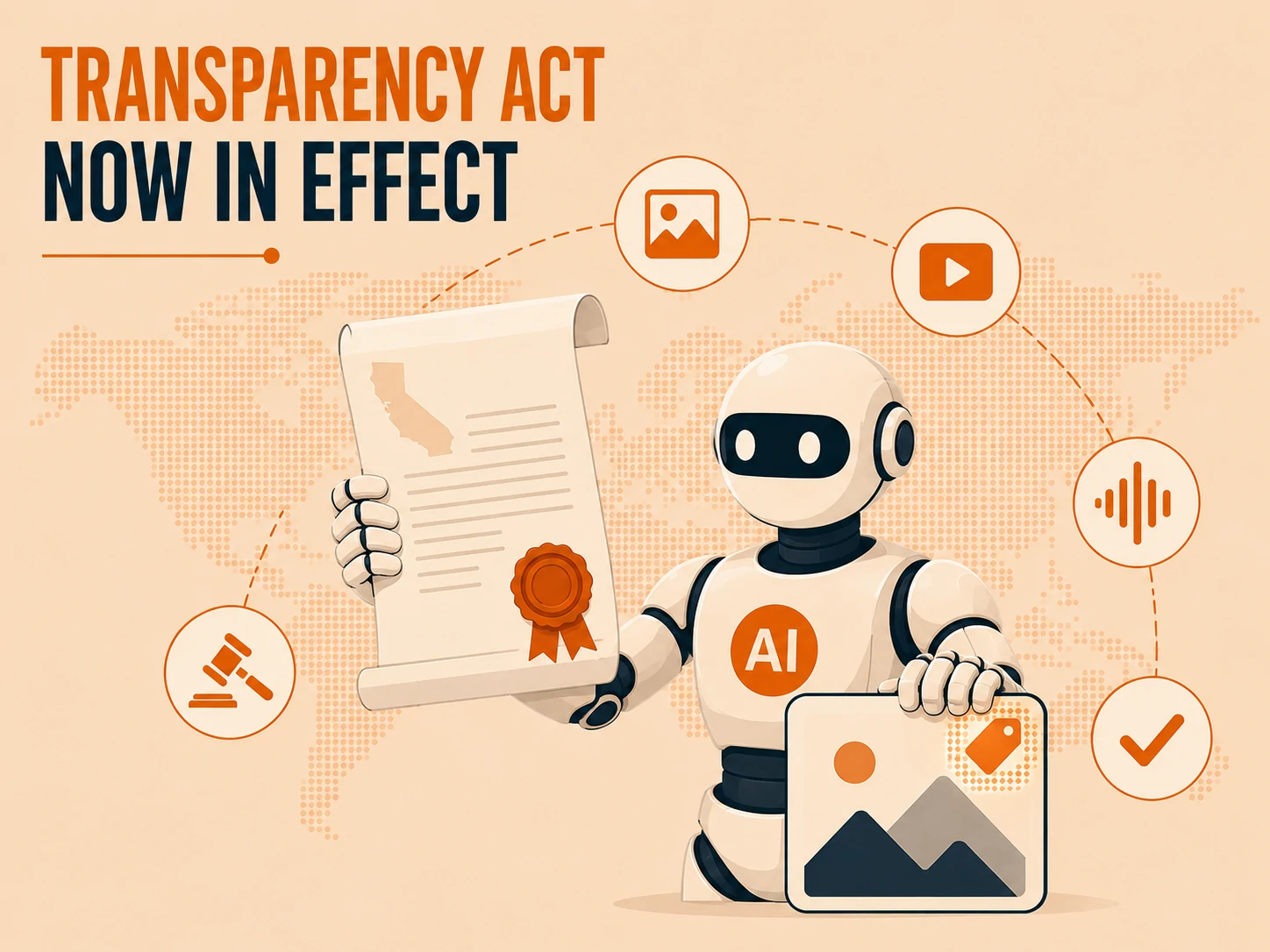
A California law (SB 942, amended by AB 853) requiring large generative AI providers to offer free AI-detection tools and embed disclosures in AI-generated content, operative since August 2, 2026.
What it is
The California AI Transparency Act makes the biggest AI companies help people tell AI-generated content apart from real content. It was passed in 2024 as SB 942 and amended in 2025 by AB 853, which moved its start date to August 2, 2026 and added duties for platforms and device makers.
What it requires
Covered providers, meaning generative AI systems with more than one million monthly users that are accessible in California, must:
- offer a free AI-detection tool so people can check whether content was made with their system, and
- embed disclosures in AI-generated images, video and audio, with an option for a visible label.
From January 1, 2027, large online platforms must detect and show this provenance information. From January 1, 2028, makers of capture devices like cameras and phones must offer provenance disclosures by default.
What it means for you
Over time, you should see more labels and checking tools for AI-generated media. Our full explainer covers what changed on day one. For the European equivalent, see the EU AI Act.
Timeline
California enacts SB 942, the California AI Transparency Act.
AB 853 is signed, moving the operative date to August 2, 2026 and expanding the law.
The California AI Transparency Act becomes operative.
Large online platforms and generative AI hosting platforms must detect and display provenance data.
Capture-device makers must offer provenance disclosures by default.
In the news
Sources
- California Enacts AI Transparency Law Requiring Disclosures for AI Content, Jones Day
- California AI Transparency Act (SB 942): What Businesses Need to Know Now That It Is Operative, Kolmogorov Law
- California AI Transparency Act (SB 942): 2026 Compliance Guide, AI Laws by State
Every fact on this page comes from the sources above. Entries are re-checked when things change. Spotted something out of date? Tell us. Read our editorial policy.